
I have to reveal a terrifying truth to you. Some of you won’t make it. Although we’ve come a long way as a group, not all of you can be featured in this story. Unfortunately, some of you will have to be removed due to the limited word count.
OK, You don’t need to talk dramatically to your first draft before editing, but a little pep talk might help before you start because editing is tough, yet crucial.
A good, clean edit can be the difference between an OK Piece of writing and a great piece of writing. Learning how to edit your own work is just as important as learning how to write in the first place so let’s take a look at some tips on making that journey as easy as possible.
1. Edit at the End
Listen, no one ever said your first draft had to be great, heck it doesn’t even have to be good. It can be bad, all the way to the bone bad, riddled with spelling errors, clichés, and plot holes baaaaad. It can be all of those things. It just has to be written. One of the quickest ways to halt the creative flow is to try and edit as you write. This is the first and biggest piece of editing advice – WAIT TO THE END TO EDIT.
If you try to correct your story while you’re still dreaming it up, you can easily lose heart, slow momentum, and give up. Just get the damn thing written and then you can bring out the big red pen at the end.
As the late great sir Terry Pratchett said “The first draft is just you telling yourself the story.”
Your creative brain is a child at play, it’s having fun and in order to dream it’s biggest and brightest, your creative brain needs to feel safe. Your creative brain is the one that will get the story told. Don’t frighten it away by introducing your editor brain at this point.
Editor brain is serious, and grown up, editor brain makes sure we eat our vegetables and fully develop our character arches. Your editor brain is important but it is not for now. Right now, you have full permission to create, to play, to get things wrong and to be bad. Remember, you can edit a bad page but you can’t edit a blank page.
2. If it’s not adding, it’s taking away
Sometimes it’s hard to know what to keep and what to let go of. It all feels important. After all, you wrote it for a reason, right? But the truth is, sometimes you have to cut things not because they are wrong or bad but because including them doesn’t actually add anything. There is a school of thought that if it’s not adding anything, then it’s taking away. That is to say, it’s possible that it might actually draw focus, slow pace, or confuse the direction of the story.
Coco Chanel once said, “Before you leave the house, look in the mirror and take one thing off.” The same can be true of writing, sometimes less is more. If you’re unsure about including something, whether it’s a word, a description, or even a whole character, ask yourself, “What does this bring to the story?” If the answer is “nothing” or even “I’m not sure,” then remove it and see what happens. After all, you can always change your mind and put it back in again.
“Murder your darlings” is a popular phrase in writing, but might I suggest a less dramatic option? “Cryogenically freeze your darlings.” Plenty of writers have a folder on their computer full of cut chapters, characters, and descriptions, tucked away for another story. It can make letting go of them a little easier and anything that enables you to tidy up your writing is worth trying.
3. Read your work out loud
The way we read in our heads is very different from the way we read out loud. Reading your work out loud helps you understand how your audience will read it. By reading aloud you are forced to acknowledge the pacing, you will pick up on unnatural dialogue and if you find yourself cringing over a description then it’s time to get the red pen out. It’s all too easy to brush over, ignore or simply not notice these things when we read in the comfort of our own heads. Read it slowly, as if narrating for an audiobook. Get your best-spoken word groove on and be ready to read it multiple times. Hear the music in your words and the rhythm in the story, and notice any dissonant notes. The second time around, divide it into paragraphs and tackle the more nitty gritty corrections.
You don’t need necessarily have to seek feedback at this point, but you’ll be surprised by how much you’ll notice just by hearing your work. Putting yourself into “reader mode” makes it easier to spot spelling errors, typos, and storytelling mistakes. Read it to the wall, the wind, or even the cat, but please read it out loud and listen to your own voice.

4. Print it out
Like the reading-out-loud technique, there’s something about viewing your work on paper that gives it a different feel. Our eyes and brain absorb information differently from screen to solid print. Have you ever edited on the computer, thinking the document is flawless, only to print it out and spot a glaring typo right in the middle of the text? Just me? Oh, OK.
Spotting mistakes in writing is often easier for most people when it’s in print rather than on screen. This is because our eyes have to work a little harder when reading the pixels on a computer screen so you literally view the words differently in print form, allowing you to spot errors and view your work in a new light. Digital eye strain is exhausting and inconvenient so if nothing else but the health of your eyes and your sanity, give yourself a break from the computer screen and edit the old-fashioned way. You can even edit with a quill and a smoking jacket if you like, but that bit is optional.
5. Over explaining
Sometimes we get carried away when describing things and telling stories. It’s fun, I love getting carried away, hoist me over your shoulder and carry me all the way to the party my friend. For me, writing is all about getting swept up and carried away. But at some point, we have to wake up from the party and clear out the empty beer bottles. It’s always easier to edit stuff out than desperately trying to shoehorn it in so getting carried away with our writing isn’t necessarily a bad thing. That’s what the edit is for. That’s when you have to take the beer goggles off and ask yourself, do I really need this? Haven’t I said all this all before? Am I just repeating myself? Am I just saying the same thing over and over and over again? Well, AM I?!
And sometimes we over-explain not because we’re having a good time but because we’re scared. We are scared that we will not be understood, that our words and story are not clear enough so we slap a little more description on. A bit more dialogue here, another metaphor there, and before you know it you can’t see the trees for the cliché.
Trust that your readers are smart enough to understand what you mean and trust yourself that you are smart enough to write what you mean. You don’t have to spoon-feed the story to your readers. A bit of ambiguity can be good for a story.
6. Cut out unnecessary filter and filler words
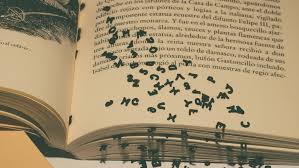
Ok, y’all this is my biggest sin, this is my crutch, my bad habit, my Achilles heel. Removing filler words is a big part of my editing process, honestly, they just sneak in! Filter and filler words tell the reader about everything that’s happening instead of just showing them. Remember, show don’t tell. Here is an example.
Hannah knew that it was pointless in arguing. She thought that it would have been better if she had never come home at all but despite everything, she still desperately felt the need to gain her mother’s approval.
Nothing technically incorrect about that paragraph. We can understand what is happening in the sentence, but let’s compare it to this.
Hannah knew it was pointless to argue. It would have been better if she had never come home but despite everything, she was desperate for her mother’s approval.
Without filler words, the second example is clearer and cleaner, it’s pacier and we are more directly shown what the character sees and feels.
Filter or filler words aren’t necessarily bad, they just aren’t always essential. Ask yourself if they slow down the pace and if we can understand the sentence without them. If yes, then toss them overboard and speed on with the good bits of your story!
I think we use filler words, almost subconsciously, in the same way, we say “umm and err”. We’re hesitating because we’re shy or unsure about what we’re writing, a literary way of slowing ourselves down. It’s just a theory I have, there’s no science behind it so don’t go quoting me to Facts Weekly. All I know is that when I am confident in what I am writing, I use less filler and filter words. Just a thought.
7. Take a break
One of the most helpful things you can do for your writing is to ignore it for a bit. I’m not kidding, treat that manuscript like it’s an unexpected water bill or an overflowing bin. Pretend it isn’t there and go do something else, (yes you’re right, I DO give wonderful housekeeping advice.)
Once you’ve finished your first draft, put it away AND GO DO LITERALLY ANYTHING ELSE! Meet friends for coffee, go on long walks, take up abseiling, knit an apple pie. Anything, but don’t think about your writing. You will spot errors, typos, and plot holes so much easier with a rested brain and fresh eyes.
For how long? Well, only you can gauge when your brain is ready for edit mode, but I would say that there are no extra points for rushing this stage. Unless you actually have a deadline in which case, that’s how long it takes!
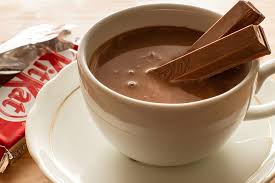
In other circumstances, your break should be however long you need it to be. Typically, the longer the piece of writing, the longer the break you will need. If it’s a 2,000-word short story you’ve written, you might only need a couple of days or a week before your brain is clear enough to edit. However, if you have just completed the first draft of a 200,000 word novel, then taking a couple of months off is more than acceptable. Trial and error will determine how long you need. Just make sure you are not obsessing over your work during that time. So have a break. You can even have a Kit Kat.
DISCLAIMER
Do I do all of these things all of the time? Do I follow my own good advice? To that, I say a loud and hysterical HA!
If writing was as easy as following sensible rules and taking good advice, then we wouldn’t all be sitting around with nervous nibbled fingernails and an acute case of writer self-doubt. Of course, I do not follow my own advice. Of course, I do the opposite of all these tips, frequently and embarrassingly so. But here’s the important bit: after I have misspelled and botched my way through that Frankenstein of a first draft I stop and I take a breath; I remind myself of the good advice and then I do my very best to apply it. Imperfectly, incorrectly, but faithfully. That’s all any of us can do.
So, if, in my own writing you see any (or more) of these mistakes please do not shout at your computer “SHE’S A GREAT BIG PHONEY!” (or, at least, don’t tell me you did). Instead, congratulate yourself on being able to notice these things in other people’s writing because it will make it so much easier for you to spot them in your own writing.
Editing is a journey, and it’s good to have friends along the way, so let’s all watch out for each other and lend a helping foot to those pesky typots.
 Moor Imagination