
We all know that we get better at what we practice. Even if you have a natural talent and innate skills you still need to spend time honing those skills and learning your craft. Just like a ballerina would do a daily barre routine or an athlete might run everyday, a writer needs to stretch their creative muscles to keep them strong.
There isn’t really a wrong way to practice writing, we’re all different writers with different strengths, weaknesses and styles. However, if you want to get the most out of your writing practice you need a method that suits you, allowing you to build and nurture your own individual skills.
So here are some tips and advice on how to create the best writing practice for you. Remember, you are in charge of your writing so you can mix up and change how you learn and develop depending on what you need that day, that week, that year. We create best when we listen to ourselves so take stock of your life and emotional state to allow yourself to make the most healthy and most relevant decisions for you. These may change depending on whatever else is going on in your life so be kind and remember to keep checking in with yourself.
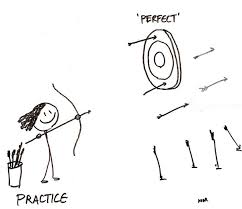
1. What do you want to learn?
Identify what it is about your writing you want to improve and why. “I want to be a better writer” is too vague to be helpful. Instead, think about the details of your writing and what you struggle with the most. Do you want to feel more confident with plot structure? Character development? Description, dialogue, metaphor? Once you can pinpoint the parts that need practice, you can focus your attention more effectively.

2. Join a group
Writing can be lonely so it’s important to find a group that you feel comfortable with. You need to be able to share your progress, get encouragement and feel inspired by others. Whether you find a local group to meet up with in person, or join a regular writers zoom online or even have one writing running buddy that you can check in with, find your writing tribe. It’s really important to have someone that you can share your practice with, both for support as well as for feedback.

3. Get a notebook
OK this one probably sounds stupid. You’re writers, of course you have notebooks or the file equivalent on your computer but this is a different sort of notebook. It’s a trash notebook. It’s battered and ugly, full of spelling mistakes and bad handwriting and YOU DON’T CARE BECAUSE THAT IS THE POINT. This is a place for you to try things out and get things wrong and write “badly”. Nobody else gets to see this. Ever. This is not the place you write your novel, this is where you experiment and it doesn’t matter what the outcome is. Give your writing a space where it is allowed to be imperfect.

4. Read
Apart from actually writing, this is the single most important thing you can do for your writing practice. It is particularly helpful if you can identify what you struggle with most in your own writing and then read books that show really good examples of that. For example, maybe you struggle with plot twists – then read some Agatha Christie! Are you trying to hone your atmospheric writing skills to create a sense of dread? Stephan King is great for that! Pick your problem and then go to the masters to read and learn.

5. Get Some Lessons
This can be in the form of a course or a one off workshop or an online seminar or even a book that you coach yourself through. There are countless options out there for writing lessons, enough to suit every timetable and purse size. Find one that feels right to you and keep attending. There is always something new to learn or something old we need reminding of. No matter how good you are or how successful you become, there is always something new to learn.
“The fool doth think he is wise, but the wise man knows himself to be a fool.”

6. Make time to practice
If you do something everyday you get better at it so make sure you carve out regular writing time. This can be really hard to do with busy lives and hectic schedules but it doesn’t have to be a long practice for it to make a big difference. Just ten minutes everyday will significantly improve your writing skills and it really does all add up. If you are struggling with finding regular writing time then check out my previous blog post on Finding Time to Write

7. Rest
Rest time is as important as practice time. If you were rehearsing for a play you would expect the director to give you breaks so that you can come back fresh. The same is true for writing. When learning it’s important to give your brain time to process what it has just learned so if you feel yourself getting frustrated or your brain is getting overheated, stop. Go for a walk, make a cup of tea, take a deep breath and then come back to your practise with a clearer head.

8. Accept that some days are better than others
Learning is not linear. Your writing practice is not going to play out like a Rocky movie montage with each shot showing your gaining better and stronger skills with zero back sliding. That is not how learning works, that is not how our brains work. Some days you will be better at this than others and some days it can feel like you’ve just taken three steps backwards. THAT IS OK AND TOTALLY NORMAL! It’s all part of the learning process and we tend to learn the most from the things we find hardest.
9. Free Writing
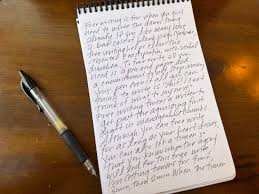
Free writing is one of my favourite ways to practice writing. The whole point of this exercise is to remove all pressure off of the outcome and allow your subconscious to take the lead. Get a pen and paper (it’s important that you write with your hands if possible). Put your pen to the paper and start to write. You don’t pause, you don’t take your pen off the paper, you just keep writing. It doesn’t matter what you write about, the only thing that matters is that you keep writing. Continue doing this until you have filled up three pages. Alternatively you can set a timer for ten minutes (or whatever you can commit to) and write continuously for that time.
You don’t read these pages back to yourself, they are not for anything, they are simply a way of getting your brain into a relaxed flow of writing. Some of you may know this practice as “the morning pages” from the Artist’s Way by Julia Cameron. She comments that “something magical happens around page two” which I have found to be true on many occasions. I highly recommend this book, it has so many good ideas for connecting with your creativity.

10. Acknowledge your progress
When a child is learning to walk do you shout at it for falling over? Or do you smile at it, cuddle and congratulate it? Do you tell them how well they are doing and to keep going?
Your creativity is a child, often shy and self conscious and sometimes misbehaving. As time goes on it becomes more resilient but berating it won’t harden its skin, only its heart. Treat your writing like you would treat a child learning and growing. Acknowledge and take time to congratulate yourself on your progress. Did you write something new today? Wonderful! Did you share something with your writing tribe? Nice one! Did you learn something new from your writing lessons? Amazing! Where you are today was not where you were yesterday, each step is a step to be proud of and if you keep doing that, just imagine where you will be tomorrow, next week, next year?

Here are the names and links to some books on writing and creativity to help support you. You can get these online or pop down to your nearest book shop and help support local businesses. I bought most of these from our beautiful bookshop in Okehampton, Dogberry and Finch. You can also order online and in person from them.
The Artist’s Way by Julia Cameron
On Writing: A Memoir of the Craft by Stephen King
Save the Cat! Writes a Novel by Jessica Brody
Big Magic: Creative Living Beyond Fear by Elizabeth Gilbert
Into the Woods: How Stories Work and Why we Tell Them by John Yorke
 Moor Imagination