
I was procrastinating the other day.
I told myself it was research but …. I can be honest with you …right?
OK …. It was procrastination.
One of my current favourite ways to avoid actually writing is to google other writers.
I’m exceptionally nosey.
No, not even that, I am fascinated, gripped, obsessed with other writers and their routines. Maybe because writing can be such a lonely and solitary activity, I find myself craving the company and reassurance of how other writers work. How do they like to do it? For how long? Where? When, and with what tools?

On this day, I had just spent a particularly difficult hour, trying to chisel out a new chapter, one painful word at a time. In need of some reassurance (or possibly a stick to beat myself with) I found myself googling “famous authors daily word count.”
I got to wondering “how many words should I be writing a day?”
And that’s a very dangerous word.
“Should.”
It is so easy to fall into the belief that we should be doing things a certain way for them to have value.
I should be writing this many words.
I should be writing for this amount of time.
I should be published by this age.
I should write about a particular genre/style/subject.
etc etc.
Should is a bitter-taste-whip- crack-across-the-face, sort of word. I fall into the Should trap all. Of. The. Time. I wish I didn’t and I don’t want anyone else to either.
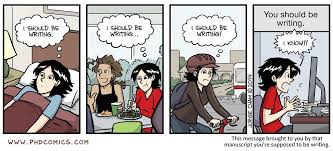
I don’t want anyone to feel like they should be doing anything at all. We all have our own way of doing things and the only thing you need to consider is, is it working for you?
BUT, like I said, I am very very nosey and so I continued googling anyway and, once I stopped comparing myself to other writers something magical happened.
I was able to enjoy sharing these different routines and habits without feeling threatened by them. Even if they were intimidating, or high brow or unachievable for my own lifestyle. Even if that writer’s habits were very different from my own – especially if they were very different – it didn’t matter. It was just … interesting. I simply enjoyed peering into their lives in a way that made me feel part of a larger community.
We are all different writers with different styles and techniques, but we are all writers. We understand this process, how it feels, the highs, the lows and what it requires from us to achieve a finished piece of work. It made me feel seen and understood and no longer lonely on a difficult writing day. And that’s something that we should* allow ourselves to feel more often.
*OK maybe it’s not always such a bad word.
Stephen King’s daily word count: 1,000 words

Stephen King’s daily writing routine has slowed as the years have gone by however he remains committed to writing daily, even on weekends. He says, “I used to write more and I used to write faster – it’s just ageing. It slows you down a little bit.” In the past, he would generate 2,000 words per day, but now he dedicates four hours to writing and achieves approximately 1,000 words.
Margaret Atwood’s daily word count: 1,000 to 2,000 words

Margaret Atwood starts working at 10am, aiming for 1,000 to 2,000 words per day and she tries to wrap up her work by 4pm but will work into the evening if her writing is going particularly well. “I’d get up in the morning, have breakfast, have coffee, then go upstairs to the room where I write, I’d sit down and probably start transcribing from what I’d handwritten the day before.”
Lee Child’s daily word count: 2,000 words
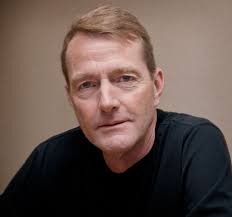
Lee Child says he aims to write 2,000 words a day, though this can vary. “Some days I write just a couple hundred words, but it’s crucial I feel pleased about it. There are so many invisible things – setting up mood, prefacing a transition. But routine narrative, I’ll write 2,000 words a day.”
Kazuo Ishiguro’s daily word count: 5 to 6 pages

Kazuo Ishiguro doesn’t write every day, but when he does, he aims for 5-6 pages per day — any more than that and he feels the quality of his writing becomes substandard. “It’s like a jazz musician who gets the best music out and then pulls out. There’s always something else productive or administrative to be done.”
Salman Rushdie’s daily word count: 400 to 500 words

Salman Rushdie says he used to write more when he was younger however it also needed more revising. As he’s got older he says he writes less but the work also needs less reworking afterwards. “I used to get a lot more written in a day than I do now—four pages, five pages. Now I’m doing 400 or 500 words. The difference is that the work used to need a lot of revision. Now I write much less, but it’s closer to a finished piece.”
Sebastian Faulks: 1,000 Words
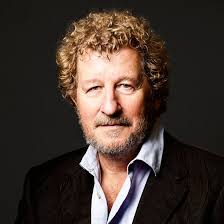
Faulks believes in consistency when working. “When I am writing a book I write from ten till six everyday in a small office near my house,” he says. “I never write less than a 1000 words a day
Maya Angelou Words 2500

Maya Angelou keeps a hotel room in her hometown and pays for it by the month. She goes in around 6:30 in the morning and asks the management and housekeeping not to enter the room. She’s never slept there and usually leaves by 2pm. She then goes home, reads what she’s written in the morning, then works on editing. “I write five or six days a week, usually a minimum of 2000 words, sometimes more. 2000 words can take anywhere from three to eight hours.”
Neil Gaiman Words 1500
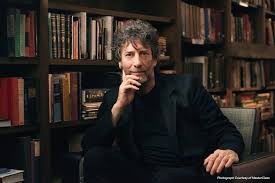
Neil Gaiman says he’ll start writing around 1pm and stop around 6pm. He writes longhand, with pen and ink which allows him to get the words out, without the temptation to edit as he writes. Then, as he copies the longhand words into the computer, he starts editing. He says when writing he only gives himself 2 options,
“You can sit here and write, or you can sit here and do nothing. But you can’t sit here and do anything else. A good day is defined by anything more than 1,500 words of comfortable, easy writing that I figure I’m probably going to use most of in the end. Occasionally, you have those magical days when you look up and you’ve done 4,000 words, but they’re more than balanced out by those evil days where you manage 150 words you know you’ll be throwing away.”
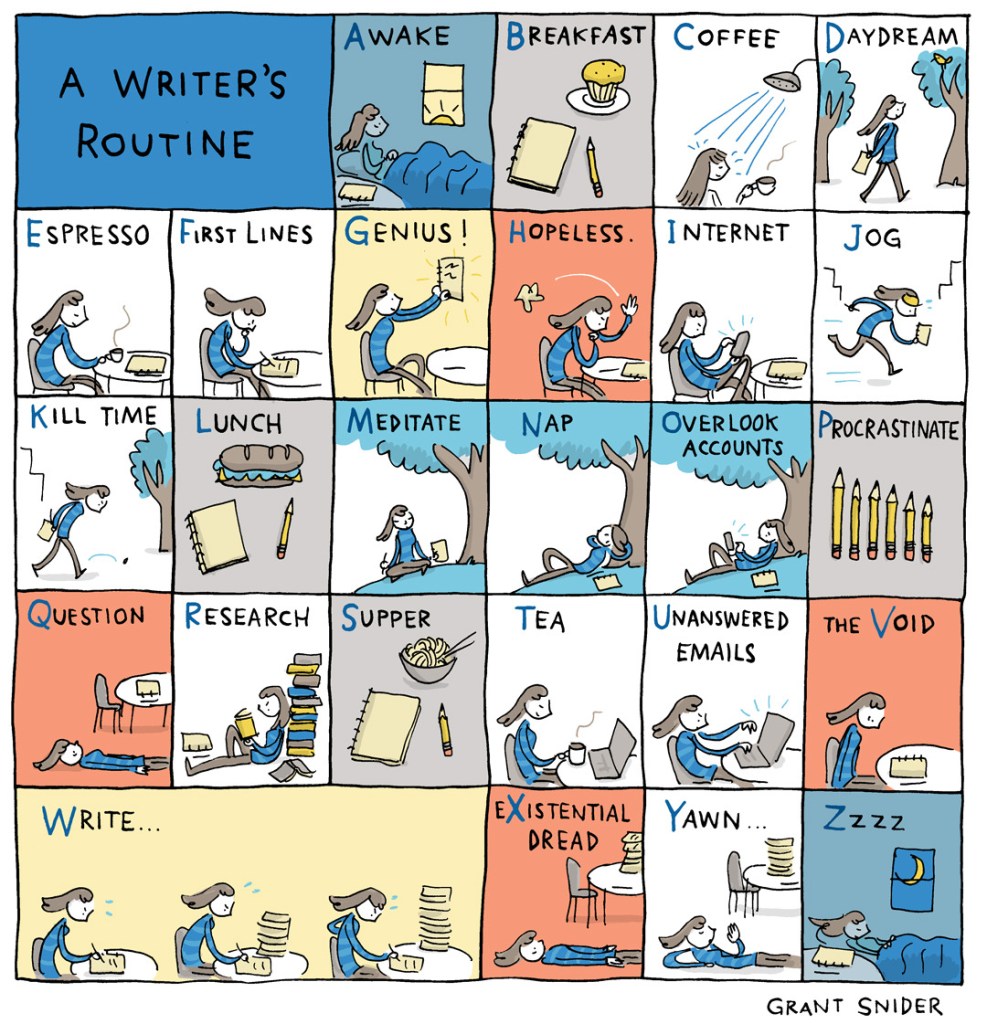
So what’s your preferred way of writing? Do you have a daily writing count, set amount of time or pages to aim for? Do you write in the branches of a tree? Upside down on your bed or at the kitchen table? However you do it, I hope it gives you joy and if it’s working for you then it’s the perfect routine for you. Good luck and happy writing!
 Moor Imagination