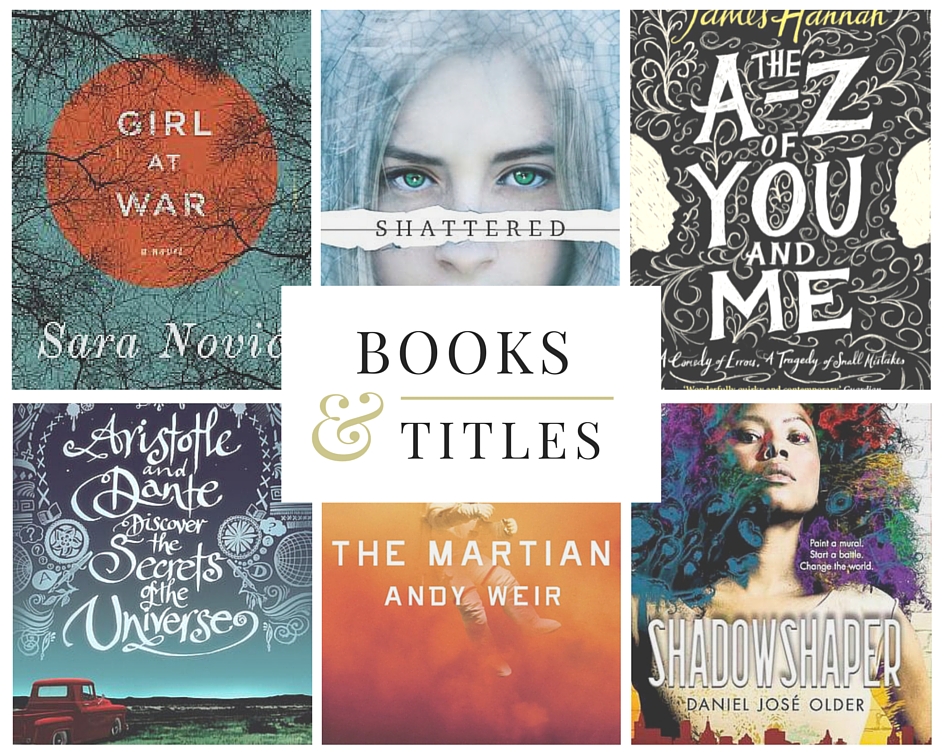
Choosing a title for your story can be a tricky business. Sometimes it can feel even harder than writing the story itself – there is so much pressure to pick the right one.
A bad title can ruin all the hard work you just put into crafting the perfect story because if your title is boring, confusing, or just plain bad, who’s going to want to read it?
I frequently find that I have a story that I like but no title or a kick-ass title, but no actual content to go with it!
Titles are something most writers struggle with at one point or another, so I decided it would be a good idea to break down some techniques, tips, and tricks to help find the best title for your story.
1. Using A Character Name from Your Story
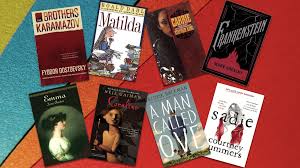
There are so many famous books that include the main character’s name. This is often seen in children’s books, especially if they are part of a series, but plenty of adult books use this technique too. You can use the name alone or you can weave the hero’s name into the action of the story, letting your readers know why this person is worth reading about.
- Emma by Jane Austen
- Alice in Wonderland by Lewis Carroll
- Harry Potter and the …. By J. K. Rowling
- Rebecca by Daphne du Maurier
- Charlie and the Chocolate Factory by Roald Dahl.
- Jane Eyre by Charlotte Bronte
2. Using a Line of Dialogue From Your Story
This can create a sense of intrigue and can also help sum up the message or theme of your book. If the line is clever, funny, or poignant, it can also be a way of giving a showcase of your writing to entice the reader in. This is sometimes referred to as a title drop.
- Who Will Run The Frog Hospital by Lorrie Moore
- Don’t Worry I’m Wearing Really Big Knickers by Louise Rennison
- Oranges Are Not The Only Fruit by Jeanette Winterson
- Are You There God? It’s Me, Margaret by Judy Blume
- Not The End Of The World by Kate Atkinson
3. Use the Setting of Your Story
If the location, or setting, is a central theme in your story, consider weaving that into your title. It’s great for hooking your reader in with the promise of an interesting environment, especially if it’s an unusual, exotic, or fantastical one.
- Nights at the Circus by Angela Carter
- Passage to India by E. M. Forster
- The House of the Spirits by Isabel Allende
- The Midnight Library by Matt Haig
- Room by Emma Donoghue
- The Beasts of Paris by Stef Penney

4. Using A Dramatic Moment From Your Story
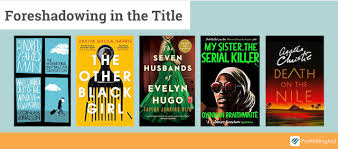
Foreshadowing a major event in the book can be a tantalising way of hooking in your reader. As long as you don’t give too much away, you can play with different ways to tease the reader with the exciting events that will unfold in your story by using a “crisis clue” as your title.
- Murder on the Orient Express by Agatha Christie
- The Fall of the House of Usher by Edgar Allan Poe
- As I Lay Dying by William Faulkner
- Let the Right One In by John Ajvide Lindqvist
- An Inspector Calls by J. B. Priestley
5. Using An Important Object
Is there an object of great power or an important item in your story? By including that in your title, you can signpost clearly to your reader where the drama and adventure will be focused, especially if the object is magical, interesting, or symbolic.
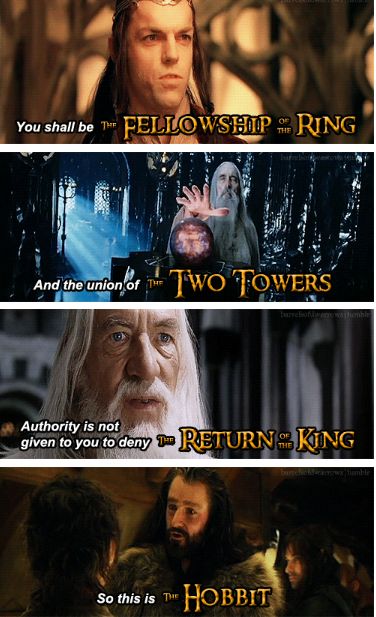
- The Lord of the Rings by J. R. R. Tolkien
- The Picture of Dorian Grey by Oscar Wilde
- James and the Giant Peach by Roald Dahl
- The Scarlett Letter by Nathaniel Hawthorne
- The Girl with the Pearl Earring by Tracy Chevalier
6. Using Symbolism From Your Story
This can be a beautiful and subtle way of titling your story. It gives less away in terms of what the reader can expect from the plot, but it is intriguing and appeals to a reader’s creativity, adding a sense of mystery. It’s also an artistic and artful way of communicating complex central themes in your story.
- Our Wives Under the Sea by Julia Armfiled
- The Catcher In The Rye by J. D. Salinger
- The Bloody Chamber by Angela Carter
- The Bell Jar by Sylvia Plath
- The Bluest Eye the Toni Morrison
- A Gate At The Top Of The Stairs by Lorrie Moore

7. Using the Central Theme or Message in Your Story
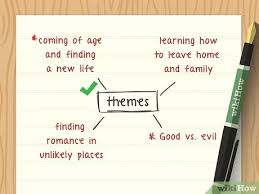
This is a concise way of letting your readers know exactly what your story is about. It leaves no confusion about your themes and content and makes it clear what kind of message you are trying to get across. It can also be a good exercise to test whether you really know what your central theme is, and if it is clear.
- Sense and Sensibility by Jane Austen
- The Unbearable Lightness Of Being by Milan Kundera
- The Rules of Magic by Alice Hoffman
- A 101 Dalmatians by Dodie Smith
- The Trees by Ali Shaw
- Vanity Fair by William Makepeace Thackeray
- Atonement by Ian McEwan
8. Using One Word to Sum Up Your Story
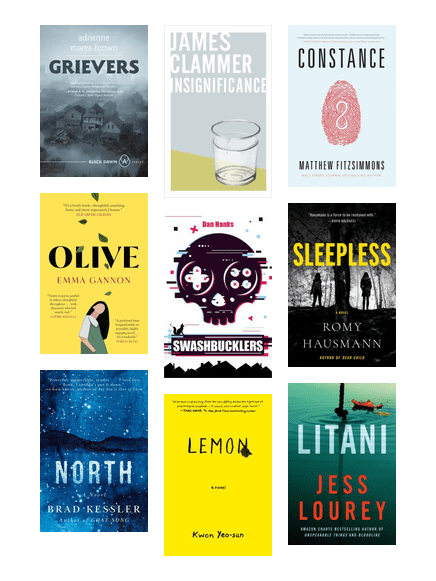
Being able to distill your story to one word has the dual effect of being both concise and mysterious. With one word, you can create a sense of unease, poignance, or importance. You can choose to use the word alone or preface with articles (A, The).
Even if you don’t choose a one-word title, it can be a useful exercise for you as a writer. – if you had to condense your tale down to just one word, what would that word be?
- The Slap by Christos Tsiolkas
- Holes by Louis Sachar
- The Cows by Dawn O’Porter
- Perfume by Patrick Suskind
- The Beach by Alex Garland
- Persuasion by Jane Austen
- It by Stephan King
9. Using an Action or Activity from Your Story
Is there an action that is fun, shocking, or unusual in your story? Including an activity or reaction in your title can create a sense of energy. This sense of ongoing movement can entice readers into the story’s momentum.
- Salmon Fishing In The Yemen by Paul Torday
- We Bought a Zoo by Benjamin Mee
- Around The World In 80 Days by Jules Verne
- Riding In Cars With Boys by Beverly Donofrio
- The Dark Is Rising by Susan Cooper
- Making Money by Terry Pratchett
10. Using Humour From Your Story
Is your story witty, silly, or laugh out loud? Then let your readers know how hilarious you are by including your funny vibes in the title. Giving your book a playful title is an excellent way of signposting your genre and finding your audience. If they laugh at your title, they will want to read the rest.
- So Long and Thanks For All The Fish by Douglas Adams
- And Then It Fell Off In My Hand by Louise Rennison
- The Fifth Elephant by Terry Pratchett
- Death and Croissants by Ian Moore
- The Book That No One Wanted to Read by Richard Ayoade
- Woman of a Certain Rage by Georgie Hall
- Eating People Is Wrong by Malcolm Bradbury
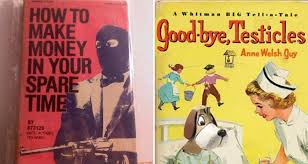
What you might have already noticed is that plenty of titles do more than one thing. Sometimes they include character names and actions. Sometimes they are funny and also use dialogue. Titles can do more than one thing and often do. Hopefully, these will give you some inspiration and you can have fun playing around with different ideas. Here are some other general tips on crafting a killer title
- Keep it short – in general, most titles are between 1-5 words long. That’s not a concrete rule, it’s simply the most usual amount. The exception to this is usually comedy titles, where a long one can be funny.
- Don’t mislead – some titles sound super cool, but if it has nothing to do with the story, then the reader could end up feeling frustrated and even betrayed by the writer. You can be mysterious but be honest.
- Make it special – you want to pick something that hasn’t already been used. Try searching for your title and check that one like it doesn’t already exist. You want to stand out and not get confused with someone else’s book.
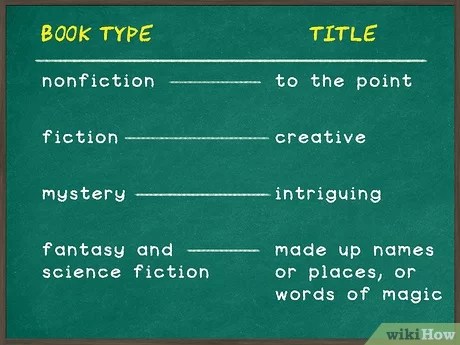
- Let your genre lead you – are you writing crime? Mystery? Thriller? Use that vibe to help you pick your title and guide the right audience to your writing style.
- Make it easy to remember – a concise, clear title that makes sense is the most important thing.
- Appeal to your target audience – ask yourself, if someone enjoyed my book, what other books would they like? Look at similar books and their titles to get a general feel for what your title should sound like.
- Say it out loud – it might seem obvious, but say your title out loud to yourself. Ask other people to say it out loud to you too. Do you still like it? Is it easy to say and understand? Try putting it in a sentence, “I’ve just finished reading this new book, it’s called …” How does it sound in context, and how do you feel saying it?
At the end of the day, don’t worry if you don’t know what your story is called yet, most writers don’t settle on a title till after they’ve finished the first draft because hopefully, by then we actually know what our story is about!
 Moor Imagination