When I was little, I used to love those Choose Your Own Adventure books. You know the ones: if you want to open the haunted wardrobe, turn to page 42. If you want to run away screaming, turn to page 7.
Well, it turns out publishing your own writing feels a bit like that too.
There is no longer just one choice of road leading to a publishing deal with a traditional publisher. These days, there are whole maps of choices laid out in front of you – self-publishing, hybrid publishing, small presses, online platforms – all with their own exciting twists, turns, and occasional dragons.
This month, I want to gently take you by the hand, show you a few paths, and help you choose the right one for you. Spoiler: there’s no “wrong” way.
What is Self-Publishing?
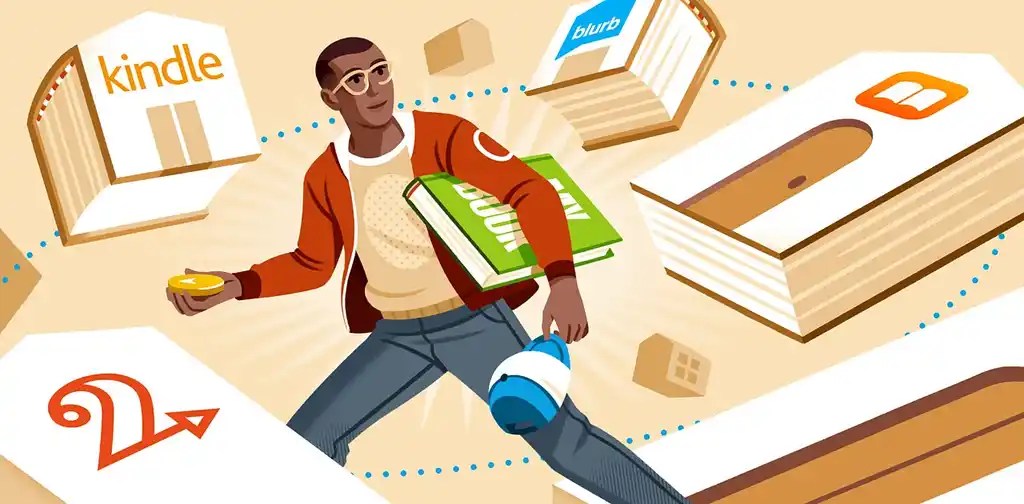
Self-publishing is exactly what it says on the tin. You write the book, and then instead of sending it off to agents or publishers hoping for a yes, you become the publisher.
You’re in charge of everything: editing, design, printing, marketing, sales – the whole shebang.
It can be wonderful. It can also be exhausting. (Sometimes both on the same day.)
Famous self-publishing success stories include The Martian by Andy Weir and Still Alice by Lisa Genova – proof that doing it yourself can lead all the way to bestseller lists and even Hollywood..
But most self-published writers are not overnight sensations. They are people who believe so much in their work that they decided to take the leap and back themselves. That’s brave. That’s brilliant.
What Does It Involve?

Here’s the quick version of the steps you might take if you choose to self-publish:
- Editing: Hiring a professional editor to polish your words (I highly recommend this, everyone can benefit from an outside eye).
- Cover design and layout: You want your book to look good both outside and inside.
- ISBN and publishing platform: You’ll need an ISBN number if you want your book sold in shops. Amazon’s Kindle Direct Publishing (KDP), IngramSpark, and Draft2Digital are popular platforms.
- Marketing: This can mean anything from setting up an author website to dancing on TikTok to convince strangers to read your poetry.
- Sales and Distribution: Getting your book into readers’ hands – whether that’s eBooks, paperbacks, or audiobooks.
It sounds like a lot because, well, it is a lot. But the good news is, you don’t have to do everything all at once, and you don’t have to do it all alone either. There are freelancers, companies, and brilliant tools out there to help you at every step.
Other Routes: Hybrid Publishing and Small Presses
Self-publishing isn’t the only alternative. There are a few other paths you might want to peek down:
- Hybrid publishing: A halfway house between traditional and self-publishing. You usually pay something towards the production, but the company handles editing, design, and distribution. Be careful though – good hybrids are brilliant; bad ones are sharks. Always check reviews and contracts carefully.
- Small presses: These are traditional publishers, but they are smaller and often more niche. They might focus on poetry, experimental writing, or regional stories. They usually accept direct submissions without needing an agent, which can be a refreshing change!
Online serial platforms: If you love the idea of publishing chapter by chapter and building an audience as you go, websites like Wattpad or Substack might be your perfect match.
Why People Choose Self-Publishing
- Creative control: Your book, your way. Nobody is going to tell you to change the ending.
- Speed: Traditional publishing can take years. You can have your book out in months if you self-publish.
- Bigger royalties: You keep a higher percentage of each sale.
Building your audience: Especially great if you already have followers, or if your book speaks to a niche market.
Why People Might Think Twice
- It’s hard work: You are the writer, the publisher, the marketing department, and customer service, all rolled into one.
- Costs: Editing, cover design, marketing – it can add up. A professional-looking book is an investment.
- Credibility hurdles: Some readers (and awards) still treat self-published books with a bit of side-eye. This is changing, but slowly.
- Marketing is non-stop: Writing the book is only half the journey; getting people to find it is a whole other quest.
Final Thoughts: Picking Your Perfect Path
Choosing how to publish your book is a bit like picking your weapon in an RPG game: sword, bow, magic staff? There’s no one “right” choice — only the right choice for you.
If you love full control (and a bit of chaos), DIY self-publishing might be your thing.
If you want help but still want to stay captain of your ship, assisted self-publishing could be your best bet.
If you’re looking for a guiding hand and don’t mind sharing costs, hybrid publishing might be your golden path.
Whatever you choose, do your homework, keep your wits sharp, and remember:
You are already a warrior of words, and your story deserves to be told.
Self-publishing is a big topic, and there’s much more to explore than we could fit into one blog post.
If you’d like us to dive deeper into the different self-publishing routes, just leave a comment below or get in touch with us on social media — we’d love to hear from you!
We can tackle your questions (and a few publishing dragons) in next month’s blog.
 Moor Imagination