
It can be really intimidating, looking at the shelves in a bookshop, all those stories, all those ideas, all those writers. Where did they start?
They started, just like you.
Human beings are instinctive story tellers, we do it almost without thinking, chatting with our friends, telling our families about what we’ve been up to, sharing a funny thing that happened on the bus yesterday. We all do it, everyday.
Writing is simply an extension of that.
Someone, somewhere, wants to read the story you want to write. You’ve just got to be brave and take that first step.
Here’s how.
- Don’t be afraid to be bad
If you never try then you can never fail, right? Don’t let the fear of failure stop you from starting to write. When you first start writing it might not be good, in fact it probably won’t be, and that is fine. Keep going because whatever you practice you get better at. Nobody starts off being a genius at the piano, you have to master scales first. The same goes for writing. Don’t be afraid to be bad. You have to go through that bit to become better and if you never start, you will never get better.
2. Ignore your mistakes (to start with)
Don’t let yourself get distracted with the details. If you keep stopping to check your spelling and grammar, to reread and edit as you go you will very quickly lose your momentum and become discouraged. Correcting mistakes, fact checking and editing are all really important but they are jobs for later. Ignore the mistakes for now and just get your story written. “You can’t edit a blank page” and if you keep focusing on getting it right then you’ll never actually write.
3. Live with your idea
Thinking about your story is just as important as writing your story. Let this new idea take up space in your head, tell yourself the story, think about the characters, feel the things that you want to bring forth in your writing. If you can’t stop thinking about your idea then you know that it’s something you’re going to want to write about. All writing starts with your imagination so get used to playing inside your own head and telling yourself stories.
4. Read
Perhaps the most important thing any writer can do is read. Good writers are good readers, if you don’t know what you like to read, how do you know what you like to write? Read widely too, read different genres, different styles, workout what you enjoy reading and also, what you do not enjoy reading. We learn just as much from “bad writing” as from genius writing. If you can identify what you think is bad, you will have a better chance of spotting it in your own work. Read, read, read.
Take breaks
It’s important to rest your brain and, metaphorically, refill your cup so take constructive breaks to clear your brain. Going for a walk, staring out of the window, listening to music, talking to a friend. These are all great ways of clearing the creative cobwebs.
By refiring your imagination it allows you to return to your writing fresh and ready for more creativity. You cannot pour from an empty cup.
Find a rhythm or choose a target
Your brain is a muscle, the more you use it the stronger it gets and just like committing to an exercise regime, it’s important to work out how and when you are going to write so it becomes a daily habit.
Write for a half an hour every morning before work.
Write 500 words every day.
Before bed, open your notebook and write one page before going to sleep.
Think about what fits your lifestyle, try a few different routines until you find one that works for you and stick to it.
Be interested in the world around you
The world is wide and full of stories. Engage with it, read about it and listen to people around you. Listen to their stories and find out what interests you. Maybe you love true crime? Maybe world history is your jam? Perhaps you love a really spooky poltergeist legend? Be interested, ask questions and explore the playground that is our planet. Once you start opening yourself up you will find ideas flooding you wherever you go.
WRITE
Now that you have your routine and you’ve been thinking about your idea and you’ve read loads of books, the most important thing is to actually write. That can feel a bit daunting, can’t it? Don’t overthink it, don’t worry too much about what you’re writing or even how you’re writing (remember it doesn’t have to be good yet) just write. One word at a time, that’s how any great piece of fiction is written, one word at a time.
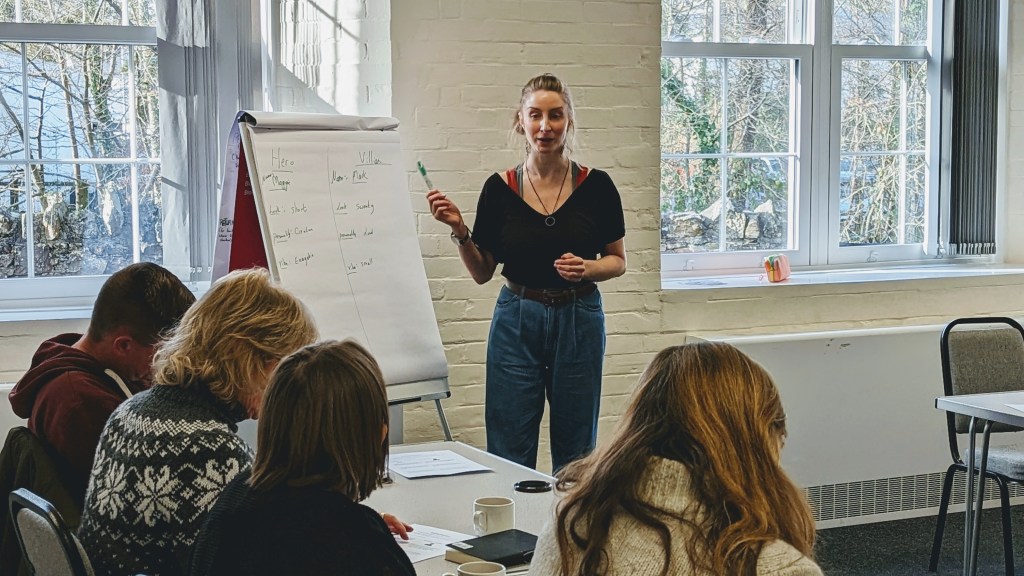
 Moor Imagination