The Year of 100 Rejections

We all like being told “yes.” 

Yes, you can have the last biscuit. 

Yes, you got the job. 

Yes, we would like to publish your writing. 

Yes, yes, YES! 

Yes is a magic word, yes is a mood booster, happy smiles, good feelings inducer. Yes is a drug. And just like a drug not getting your “yes” fix can have the power to crush you. If “yes” is a magic word then “no” is a powerful word or at least, that’s the way it feels. 

In the past, I have allowed the No’s of the world to rule my mood and, worse, dictate my sense of self worth. I have given all my power to No without even realising it and then wonder why I feel so down on myself. So what’s the solution? Never put yourself in a position to hear No or anything negative? 

When being creative we put ourselves in an unbelievably vulnerable position, we express ourselves in the most exposing way possible and then, if we’re very brave, we share it with others. Sometimes – lots of times – the response is positive. People give us encouraging feedback, praise and sometimes even a yes to publication. And that feels good. Maaaaan oh man that feels so good. But as good as that Yes feels the No feels like the worst kind of bad break up. 

Having your creative work rejected can feel like a very real rejection of yourself, like you personally are no good and it can make you feel like you don’t want to try anymore. No can have so much power its like a bad fairy curse. 

And unfortunately, statistically, I am going to hear a lot more Nos than Yes’s. 

JK Rowling was turned down by 12 different publishers before she got her Yes. Stephan King was rejected by more than 30 publishers before finding global success. Agatha Christie, the world’s best selling author to date, never saw her first novel published and her second was rejected multiple times until she agreed to change the ending.

We are all of us, no matter how good we are, going to hear No.  A lot. 

So, I figure, rather than letting the word No have all this negative power over me,  I am going to get good at hearing No, I am going to revel in rejection and become the best at failure. 

2024 is going to be my year of 100 rejections. 

Some of you may already be familiar with Rejection Therapy and the 100 days of rejection challenge as a form of healing. You can read more about it here

My rejection challenge is purely writing related, I will be submitting my work to as many different places as possible with the aim of getting 100 Nos by the end of the year. This isn’t because I’m a glutton for punishment, rather it’s a way of taking the pressure off of the outcome.

I do not want my good feeling to be reliant on getting a yes. My goal is to make my good feeling creation focused, on writing, making and sharing.  If I do happen to get a Yes  then that’s cool too but Yes is no longer the same thing as a successful outcome. Simply putting my work out there will become the Yes and an exercise in success. 

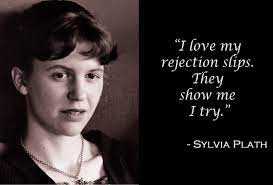
Slyvia Plath said “I love my rejection letters, they show me I try.”  

Stephan King famously had a nail in his wall for all his rejection slips “By the time I was fourteen the nail in my wall would no longer support the weight of the rejection slips impaled upon it.” King’s response to this was  – GET A BIGGER NAIL! 

I love this, it takes your power back from no and frees you from the fear of failure precisely because you no longer see No as a failure but proof of your success at TRYING. And that’s all any of us can do, right? 

So I am excited for my first rejection of 2024. I am ready for it, like a game of cosmic tennis, as soon as I get a No I’m going to ping it right back with another submission to someone else, someplace else. I’m going to keep on going because that’s the bit that feels good, that’s where my joy as a writer lives. “No” doesn’t dictate my self worth or confidence. No is a call to arms, a space to fill with something new, no is a challenge and a game and an opportunity and no longer has any power over me. 

How to Begin

There can be a lot of pressure on beginnings. To begin with a bang, to hook the reader, to say the clever thing, the poignant thing, the right thing. 

The power of a good beginning is undeniable but it can also feel like a big burden and with all that pressure on just a few innocent words it can be easy to clam up and not say anything at all for fear of saying the wrong thing.

I’m a sucker for a beginning. I love the first page of a new notebook, the first sentence of writing a new story, the first week of a new year. It’s all so shiny and fresh and full of potential. There’s a lot of pressure to get the beginning RIGHT but beginnings can also be fun and exciting. They don’t have to be anything more than simply a place to WRITE. 

With the beginning of the new year I encouraged myself to really look at the beginning of stories. What types are out there, how do others start their stories and how can they inspire you to begin your own story.

I hope you will find them as inspiring as I do and reassure yourself that a beginning doesn’t have to be a burden, it doesn’t even have to be brilliant, it just has to be a pace to begin. 

A story needs to start somewhere

Sometimes the perfect opening line just comes to you and other times you find yourself staring at a blank page trying to remember what words are. In those moments the fear of starting wrong becomes so great that we fail to start at all. What do I write? What do I write? WHAT DO I WRITE?! When I find myself in that type of funk I have to remind myself that the answer to that question is ….nothing. 

Nothing I write in this moment will feel good enough so just write something, ANYTHING, to get the story started. You can always go back and change it if you have a better idea. That being said, sometimes our original ideas prove to be just the right one. 

In the beginning …

What kind of party are we invited to?

The beginnings that I like best are the kind that let me know what sort of story I’m in for. Are the opening lines funny? Spooky? Dramatic? Is it irreverent, lyrical, serious, magical? After all, I’m going to be sticking with this book for a few hundred pages so I would like to know what kind of party I’m invited to. Do I, metaphorically, need to be dressing for a costume party or do I need a ball gown to attend? Whatever you choose to write about in your opening lines, ask yourself if you are staying true to the style of your story. Openings are important but it’s just the first peek into the story so don’t try to be anything but honest. Let your guests know what they are invited to so the right people stay and read on. 

Stories that start at the End

You don’t have to start your story at the beginning. Sometimes the best way for your particular story to start is right slap bang in the middle of your protagonist’s crisis point or even after the main event has occurred. Starting at the end can be a great way to hook your reader and then the journey is revealing how your character got there. WE know a murder was committed, but how, and by who? We know the police are banging on the door but why? These beginnings always make me feel like the writer has grabbed me by the hand and yelled “hold on! Here we gooooo!” which can be a really fun and exciting way to start a story. So if you’re not sure where to start, consider shaking things up and start at the end. 

Start with a Shock

What’s the most surprising, exciting, wonderful or upsetting thing that happens in the whole story? We often hold onto that for the juicy middle but what if you reveal it in the opening lines? What is your story’s core? What’s the main event? What’s the big message? Let us know what you’re all about straight away, no messing around, and then the reader knows you aren’t going to throw any punches. If that’s just the opening line, what else are we in store for?  If you can make the reader gasp on the first page then they’ll grasp on till the last page. 

A Story Like Mine

A story doesn’t have to start with a bang. Most stories don’t, most of them start just like yours and mine. And that is something that can hook a reader too, a sense of connection. Finding something that we can all relate to is a great way of welcoming your readers in and letting them know, this story is for you, I see you, I understand you  and you are welcome here, with me. 

Vibes

Ask yourself, “how do I want my reader to feel?” When they read that opening line, what kind of atmosphere do I want them to step into? This is particularly effective if you are writing something with a touch of magic, suspense or the supernatural. This is also a chance to let your reader get to grips with your particular writing style. Do you write in a very lyrical, poetic way? Do you use short sharp statements to create effect? In the same way that music can affect the mood of a film, how do your opening words vibe out the opening? Personally I love an opening line that gives me goose bump vibes by using a beautiful turn of phrase or a bit of spooky foreshadowing . 

Beginnings are exciting but it’s often not until we’ve reached the end that we really see our true beginning. Try to hold onto the fun of creation and not put too much pressure on your opening lines, or on yourself. After all, it’s simply a place to start from and you can always go back and change it later. Just keep writing till you get to the end because, much like life, it’s the end that often lets us understand the beginning. 

Happy 2024!

I’m Dreaming of a Write Christmas

I love Christmas. I love the smell of spice, evergreen garlands, and twinkling lights. And snow. Even though it has never actually snowed over any of my childhood Christmases, I still dream of a white Christmas. 

That’s because I believe in magic. Not in a “Haha play along for the kids” way. No. I believe. I deep down, cross my fingers, wish upon a star, blow out the candles, believe. I want there to be magic at Christmas, and I love to help make it. 

I’m from a big family – the sixth of seven children – so the house was always full of noise, and games and laughing (because of the games) and crying (also because of the games) but most of all, it was full of magic making. 

With so many of us, money needed to stretch, but it didn’t matter because everyone knows, you can’t buy magic. Magic has to be made. 

We made our presents, we made our decorations, we made up Christmas stories and performed them to each other on Christmas Eve. 

Of course, we still trawled the Argos catalogue and begged for a Furby (It was the 90s, I make NO excuses) but the main thing I remember about Christmas was, what we made to create magic. 

We never had a proper white Christmas, but we believe the memories we made together are all just as magical as if it had snowed. That’s why it’s called make-believe. 

And then something happened. Somewhere along the way, Christmas just stopped feeling magical. Ironically, that was also the year it finally snowed. Deep, fairy tale wandered into Narnia, snow, but something about that year was off. I didn’t feel the magic. I felt the stress, I felt the pinch in my purse,  I felt overwhelmed and irritated. I felt the cold. 

But I didn’t feel the magic. 

Maybe I was too old for it by then, maybe magic was only for children, but that was also the year I didn’t make anything. No Christmas cakes, no cracker jokes, no handmade gifts, and no Christmas stories. I was too busy, or so I told myself. We had a white Christmas, but it was not a write Christmas and certainly not a right Christmas. 

I love Christmas, but Christmas can be … a lot. Especially now I am no longer a child and have children of my own. It turns out making magic takes a lot of effort and I chase my tail so much I have very little time left to chase any other tale (see what I did there?) 

As much as I love the idea of curling up beside a Christmas log fire and writing, I seldom have time to do it. Which makes me feel guilty, and that makes me feel even less like writing and THAT makes me feel grumpy. I don’t want to make magic then. I don’t want to make anything and I lose all the love I once had for Christmas.

I felt it a lot last year, with a new born baby tucked under one arm and a toddler under the other as I tried to organise gifts that looked like they had been wrapped with my foot (because they had. I’d run out of arms, people!) 

Everything felt more mess than magic. I didn’t make anything or write anything and I have to admit, the guilt made me a bit of a Scrooge. 

Sometimes there is no time to write, but does that need to be another thing to feel guilty about? Writing is meant to be fun, right? It’s meant to be enjoyable and freeing otherwise why do we do it? But with so much to do over Christmas, does it need to be another thing to tick off our long list as magic makers? 

NO. 

Not this year. 

This year I have promised myself something. A little Christmas gift to myself, maybe even an early New Year’s resolution, and a reminder from child me to grown-up me about the making of Christmas magic. 

Do less. 

Do less so that I can do more. 

I can’t make all the magic at Christmas. I can’t write every day, I can’t make mulled wine from scratch, I can’t hand craft evergreen garlands around the house and sing carols every day. And I don’t have to either. Instead of thinking of it as a long list of things I HAVE to do to make Christmas magical, I’m going to think about what I WANT to do to FEEL magical. That might mean writing every day and it might not. It doesn’t matter, because I’m not going to feel guilty about it. This year I’m just going to enjoy making and what I’m making is magic. In whatever form that takes.

Would it feel more magical to read a story today, rather than write one? Would it feel more magical to make zero decorations but fill the house with the smell of mince pies? Do I really want to write today or does my imagination need to hibernate? This year I believe in magic, and like all good fairy stories, I will listen to the spirit of Christmas to find the magic. 

Trying to do everything was exhausting and disheartening and I just felt like I was doing it all badly. It might not be a white Christmas or even a write Christmas but it can still be a magic one. And that’s the right kind of Christmas for me. 

Secret Santa Side Note …. 

I love to hear about other people’s magic. What makes Christmas magical for you? I know one family who reads The Night Before Christmas together on Christmas Eve. Another family turns off the TV and plays silly games together. My Mother makes a Christmas pudding every year and we all have to stir in a wish before it’s cooked. What’s something that makes Christmas magic for you? Pop along to our Instagram or Facebook pages and share your Christmas magic moments.

Because you can’t buy magic, you have to make it. In the words of Mariah Carey, I don’t care about the presents underneath the Christmas tree (unless it’s Furby). 

Seven Tips For Editing Your Writing 

I have to reveal a terrifying truth to you. Some of you won’t make it. Although we’ve come a long way as a group, not all of you can be featured in this story. Unfortunately, some of you will have to be removed due to the limited word count. 

OK, You don’t need to talk dramatically to your first draft before editing, but a little pep talk might help before you start because editing is tough, yet crucial.

A good, clean edit can be the difference between an OK Piece of writing and a great piece of writing. Learning how to edit your own work is just as important as learning how to write in the first place so let’s take a look at some tips on making that journey as easy as possible. 

1. Edit at the End

Listen, no one ever said your first draft had to be great, heck it doesn’t even have to be good. It can be bad, all the way to the bone bad, riddled with spelling errors, clichés, and plot holes baaaaad. It can be all of those things. It just has to be written. One of the quickest ways to halt the creative flow is to try and edit as you write. This is the first and biggest piece of editing advice – WAIT TO THE END TO EDIT.

If you try to correct your story while you’re still dreaming it up, you can easily lose heart, slow momentum, and give up. Just get the damn thing written and then you can bring out the big red pen at the end.

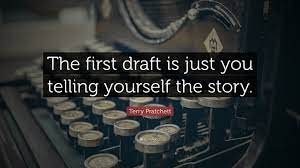
As the late great sir Terry Pratchett said “The first draft is just you telling yourself the story.”

Your creative brain is a child at play, it’s having fun and in order to dream it’s biggest and brightest, your creative brain needs to feel safe. Your creative brain is the one that will get the story told. Don’t frighten it away by introducing your editor brain at this point.

Editor brain is serious, and grown up, editor brain makes sure we eat our vegetables and fully develop our character arches. Your editor brain is important but it is not for now. Right now, you have full permission to create, to play, to get things wrong and to be bad. Remember, you can edit a bad page but you can’t edit a blank page. 

2. If it’s not adding, it’s taking away 

Sometimes it’s hard to know what to keep and what to let go of. It all feels important. After all, you wrote it for a reason, right? But the truth is, sometimes you have to cut things not because they are wrong or bad but because including them doesn’t actually add anything. There is a school of thought that if it’s not adding anything, then it’s taking away. That is to say, it’s possible that it might actually draw focus, slow pace, or confuse the direction of the story.

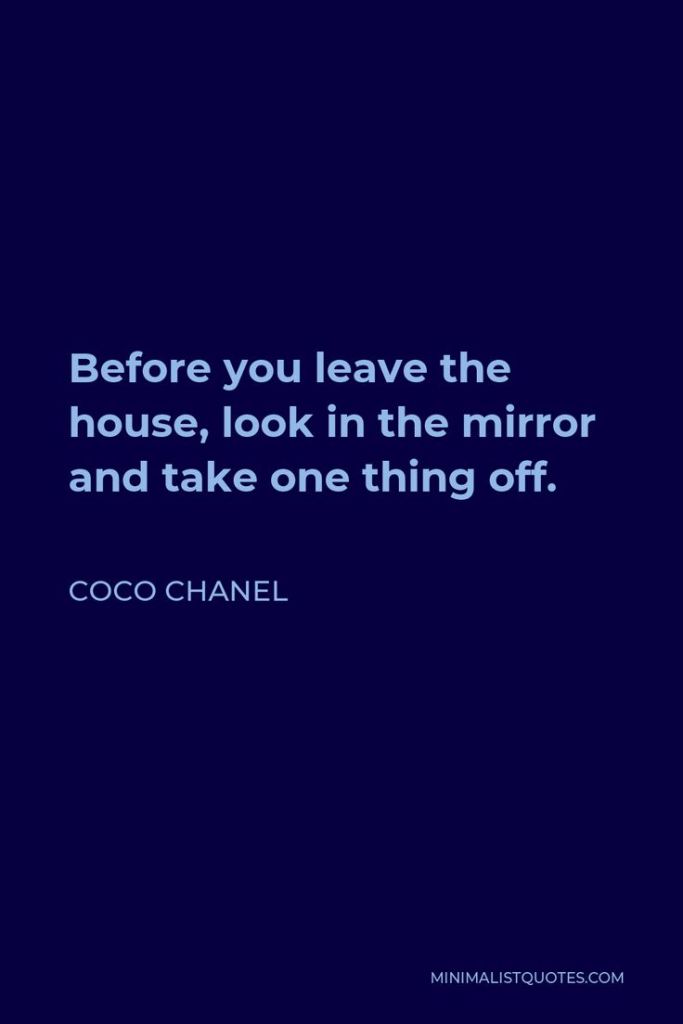
Coco Chanel once said, “Before you leave the house, look in the mirror and take one thing off.” The same can be true of writing, sometimes less is more. If you’re unsure about including something, whether it’s a word, a description, or even a whole character, ask yourself, “What does this bring to the story?” If the answer is “nothing” or even “I’m not sure,” then remove it and see what happens. After all, you can always change your mind and put it back in again.

“Murder your darlings” is a popular phrase in writing, but might I suggest a less dramatic option? “Cryogenically freeze your darlings.” Plenty of writers have a folder on their computer full of cut chapters, characters, and descriptions, tucked away for another story. It can make letting go of them a little easier and anything that enables you to tidy up your writing is worth trying. 

3. Read your work out loud

The way we read in our heads is very different from the way we read out loud. Reading your work out loud helps you understand how your audience will read it. By reading aloud you are forced to acknowledge the pacing, you will pick up on unnatural dialogue and if you find yourself cringing over a description then it’s time to get the red pen out. It’s all too easy to brush over, ignore or simply not notice these things when we read in the comfort of our own heads. Read it slowly, as if narrating for an audiobook. Get your best-spoken word groove on and be ready to read it multiple times. Hear the music in your words and the rhythm in the story, and notice any dissonant notes. The second time around, divide it into paragraphs and tackle the more nitty gritty corrections. 

You don’t need necessarily have to seek feedback at this point, but you’ll be surprised by how much you’ll notice just by hearing your work. Putting yourself into “reader mode” makes it easier to spot spelling errors, typos, and storytelling mistakes. Read it to the wall, the wind, or even the cat, but please read it out loud and listen to your own voice. 

4. Print it out 

Like the reading-out-loud technique, there’s something about viewing your work on paper that gives it a different feel. Our eyes and brain absorb information differently from screen to solid print. Have you ever edited on the computer, thinking the document is flawless, only to print it out and spot a glaring typo right in the middle of the text? Just me? Oh, OK. 

Spotting mistakes in writing is often easier for most people when it’s in print rather than on screen. This is because our eyes have to work a little harder when reading the pixels on a computer screen so you literally view the words differently in print form, allowing you to spot errors and view your work in a new light.  Digital eye strain is exhausting and inconvenient so if nothing else but the health of your eyes and your sanity, give yourself a break from the computer screen and edit the old-fashioned way. You can even edit with a quill and a smoking jacket if you like, but that bit is optional. 

5. Over explaining

Sometimes we get carried away when describing things and telling stories. It’s fun, I love getting carried away, hoist me over your shoulder and carry me all the way to the party my friend. For me, writing is all about getting swept up and carried away. But at some point, we have to wake up from the party and clear out the empty beer bottles. It’s always easier to edit stuff out than desperately trying to shoehorn it in so getting carried away with our writing isn’t necessarily a bad thing. That’s what the edit is for. That’s when you have to take the beer goggles off and ask yourself, do I really need this? Haven’t I said all this all before? Am I just repeating myself? Am I just saying the same thing over and over and over again? Well, AM I?!

And sometimes we over-explain not because we’re having a good time but because we’re scared. We are scared that we will not be understood, that our words and story are not clear enough so we slap a little more description on. A bit more dialogue here, another metaphor there, and before you know it you can’t see the trees for the cliché.

Trust that your readers are smart enough to understand what you mean and trust yourself that you are smart enough to write what you mean. You don’t have to spoon-feed the story to your readers. A bit of ambiguity can be good for a story.

6. Cut out unnecessary filter and filler words 

Ok, y’all this is my biggest sin, this is my crutch, my bad habit, my Achilles heel. Removing filler words is a big part of my editing process, honestly, they just sneak in! Filter and filler words tell the reader about everything that’s happening instead of just showing them. Remember, show don’t tell. Here is an example. 

Hannah knew that it was pointless in arguing. She thought that it would have been better if she had never come home at all but despite everything, she still desperately felt the need to gain her mother’s approval. 

Nothing technically incorrect about that paragraph. We can understand what is happening in the sentence, but let’s compare it to this. 

Hannah knew it was pointless to argue. It would have been better if she had never come home but despite everything, she was desperate for her mother’s approval.

Without filler words, the second example is clearer and cleaner, it’s pacier and we are more directly shown what the character sees and feels. 

Filter or filler words aren’t necessarily bad, they just aren’t always essential. Ask yourself if they slow down the pace and if we can understand the sentence without them. If yes, then toss them overboard and speed on with the good bits of your story!

I think we use filler words, almost subconsciously, in the same way, we say “umm and err”. We’re hesitating because we’re shy or unsure about what we’re writing, a literary way of slowing ourselves down. It’s just a theory I have, there’s no science behind it so don’t go quoting me to Facts Weekly. All I know is that when I am confident in what I am writing, I use less filler and filter words. Just a thought.

7. Take a break

One of the most helpful things you can do for your writing is to ignore it for a bit. I’m not kidding, treat that manuscript like it’s an unexpected water bill or an overflowing bin. Pretend it isn’t there and go do something else, (yes you’re right, I DO give wonderful housekeeping advice.)

Once you’ve finished your first draft, put it away AND GO DO LITERALLY ANYTHING ELSE! Meet friends for coffee, go on long walks, take up abseiling, knit an apple pie. Anything, but don’t think about your writing. You will spot errors, typos, and plot holes so much easier with a rested brain and fresh eyes.

For how long? Well, only you can gauge when your brain is ready for edit mode, but I would say that there are no extra points for rushing this stage. Unless you actually have a deadline in which case, that’s how long it takes!

In other circumstances, your break should be however long you need it to be. Typically, the longer the piece of writing, the longer the break you will need. If it’s a 2,000-word short story you’ve written, you might only need a couple of days or a week before your brain is clear enough to edit. However, if you have just completed the first draft of a 200,000 word novel, then taking a couple of months off is more than acceptable. Trial and error will determine how long you need. Just make sure you are not obsessing over your work during that time. So have a break. You can even have a Kit Kat. 

DISCLAIMER 

Do I do all of these things all of the time? Do I follow my own good advice? To that, I say a loud and hysterical HA! 

If writing was as easy as following sensible rules and taking good advice, then we wouldn’t all be sitting around with nervous nibbled fingernails and an acute case of writer self-doubt. Of course, I do not follow my own advice. Of course, I do the opposite of all these tips, frequently and embarrassingly so. But here’s the important bit: after I have misspelled and botched my way through that Frankenstein of a first draft I stop and I take a breath; I remind myself of the good advice and then I do my very best to apply it. Imperfectly, incorrectly, but faithfully. That’s all any of us can do.

So, if, in my own writing you see any (or more) of these mistakes please do not shout at your computer “SHE’S A GREAT BIG PHONEY!” (or, at least, don’t tell me you did). Instead, congratulate yourself on being able to notice these things in other people’s writing because it will make it so much easier for you to spot them in your own writing.

Editing is a journey, and it’s good to have friends along the way, so let’s all watch out for each other and lend a helping foot to those pesky typots. 

How to Stop Procrastinating

I’m going to tell you a secret. I procrastinated writing this all week. I kept putting it off and putting it off until it became this big guilty monster I was ignoring. 

I hate that feeling, don’t you? It makes me feel small, and squirmy and all knotted up in my stomach. I start making excuses for myself to make me feel better but all along I know the real reason is me. I’m the one who’s putting it off and I’m the one who can fix it. 

So why do we do it to ourselves? What sort of things make us procrastinate and how do we stop doing it? 

  1. Doing everything else first 

Answering emails instead of writing.

Doing the dishes instead of writing. 

Tidying your desk first because you can’t possibly work in a cluttered space and – oh  whoops! Look at that, you ran out of time but look how pretty and clear your desk is now. 

Instead of writing. 

I have done all of these things and more. 

Yes, all those things need to be done but do they need to be done now? Right now? This very second? Or is it just another delay tactic? 

Before embarking on any new task ask yourself “Does this need to be done now?” 

Then ask yourself “Why not write instead?” 

Almost always the task can wait. I have never regretted leaving the washing up to write a story instead.

2. Social media 

It’s so easy, isn’t it to pick up your phone to read a text, see what time it is or take a quick picture? Then while you’re there, you check in on facebook, instagram, twitter and before you know it you’ve lost half an hour of your life. You come back to your senses to find you’ve been mindlessly scrolling through nothing of any consequence, your time is gone and you feel lazy and guilty.

If this is something you find yourself doing then start laying down some ground rules to help you stay on task. 

Put your phone on silent so you can’t be distracted by notifications. 

Only visit social media sites during designated breaks and for short periods of time. Put a timer on your phone if this is something you struggle with. 

Put your phone somewhere you can’t see it. Out of sight out of mind. 

Put a social media lock on your device so that you can’t access it during certain times of the day. 

And if you do catch yourself doing the zombie scroll, don’t be too hard on yourself. These things are designed to be addictive so if you do slip once in a while, don’t beat yourself up. Instead, find a way to keep temptation out of your hands and your focus back on writing. 

3. Fear of Failure 

I asked a group of writers recently, why they thought they procrastinated. We talked round and round until someone suddenly said,

“I think I procrastinate because I’m secretly afraid that what I write won’t be good enough. If I never write it then it can never be bad.” 

Is the subconscious fear of failure stopping you from writing? 

In an airbrushed, perfection obsessed world it can be easy to forget that everything starts as a first draft, a first attempt, a first step. 

Firsts are rarely fantastic but they’re better than never starting at all. No one ever needs to see your failed attempts, your deleted pages, your wrong words. None of those things are failures, they’re just first steps. 

If you never write it badly then you can never rewrite it better. And that’s the bit that counts. 

4. Not having enough time

Before lockdown so many people said the reason they didn’t write more was because they didn’t have enough time. 

“If only I could stay at home all day and write,” they said “I’d have finished that book by now. That’s the reason. Not enough time.” 

And then the world stopped and all anyone had was time. Lots and lots of time. And we soon realized that the reason the kitchen isn’t clean, or I haven’t learned french or I haven’t written my book isn’t because of time. It’s me. Hi, I’m the problem, it’s me. 

It’s so easy to say we don’t have enough time, I get it, I do, as the mother of two children under four, believe me, I get it. The truth is though, we only do the things we’re willing to make time for. And the mistake we make is thinking you need a lot of time but you don’t need to be writing eight hours a day to be a writer. Half an hour a day will do. A sentence a day is fine. A hundred new words before midnight each day all adds up. 

Squeeze it in, make the time, curate the space. 

Writing is a lifelong habit and you’ve got all the time in the world to nurture it. 

5. Eat the Frog

No, this isn’t a witch’s spell to magic up an anti procrastination potion (though that would be nice). 

It’s a mantra and method employed by highly successful people to increase productivity. 

Simply put it means start your day by doing the thing on your to do list that you least want to do. That way there’s no chance for you to put it off and procrastinate throughout the day. 

“But I like writing!” you might protest at me as you shake your fist at the computer. 

So why are you putting it off? Just because we really enjoy something doesn’t always mean it’s first on our to do list. Maybe we’re putting it off because it seems too big a job, or because we think we don’t deserve the time to do it, or because of a million other reasons. 

The reason is not important, the important thing is are you going to do it, or are you going to procrastinate with something else?

Are you, in fact, going to eat the frog? 

Try the Eat the Frog  technique for a week and see what happens. Every day make sure the first thing on your to do list is writing. You decide how much or for how long but make it the first thing you do. 

10 Common Writing Mistakes and How to Avoid Them

I’m going to admit something, right now. I have been guilty of almost all of these mistakes at one point or another. 

I have been writing for years and yet, even now, I will still make some of these mistakes. 

That’s because they are really common, bad writing habits that are easy to fall into! 

If  you are new to writing it’s a really good idea to familiarize yourself with the good habits and if you have been writing for years, it never hurts to remind yourself of the basics. 

“If you think you know everything you will never learn anything.”

  1. Not having a plan. 

When you get a new idea it’s very exciting and you just want to start writing. That is fine.  Do that, live with your story and see where it takes you but if you find yourself losing interest half way through, or your momentum stops it might be time to look at your story and plan out where you’re headed. You don’t need to have all the answers yet, you don’t need to plot out every twist and turn, you don’t even have to know how it’s all going to end. Just give yourself a basic road map, a point in your story to aim for, so that you don’t get lost along the way. 

  1. Not reading your own genre. 

If you’re writing a thriller, it’s a good idea to read thrillers. If you’re writing lyrical poetry then familiarize yourself with lyrical poetry, if you write fantasy – you get it, read your own genre. It’s hard to write a crime novel if you’ve never read a crime novel . Spend some time in your local library or bookshop, getting to know your genre. 

  1. Don’t start too big.

Don’t give yourself an impossible task by making your first project, an epic fantasy saga to rival Lord of the Rings. Bigger does not necessarily mean better and as a new writer, if you give yourself a project that is too big you run the risk of burning out, losing confidence and giving up. Start with short stories, a novella or a stand alone novel. 

  1. Don’t switch narrative voices.

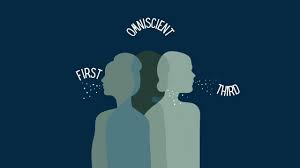
If you are writing your story in first person then continue to write your story in first person. If you’re writing in third person, continue in third. Switching narrative voice is confusing for readers and makes your writing look amateurish. 

Really think about the voice of your story, keep it in your mind until that voice is so clear that it will be impossible to accidentally switch narrative voice whilst writing. 

If you really want to tell your story from different characters POV then make it easy on the reader (and yourself) by separating those voices into different chapters. Look at books that do this successfully, such as the Game of Thrones series. 

  1. Don’t try to sound “writerly” 

Writing is actually a lot closer to speaking than most people think. You don’t have to use unusual words, or grand narration or put on a different, special writer’s voice in order to tell a good story. This is your story, you want it to sound like you, so don’t try to sound like Shakespeare or Dickens, they already have their voice. Sound like you, there’s only one of you after all. 

  1. Introducing too many characters at once 

It’s hard to care about characters if there are too many of them to keep track of. Be selective with your characters and choose carefully when you introduce them so that your readers aren’t left confused or overwhelmed.

  1. Avoid Passive Voice 

What is passive voice? It’s a lot like how it sounds, its passive, its limp, it does not hold control of the sentence. Example,

“The ball was kicked by Jane” sounds a lot less dynamic than

“Jane kicked the ball.” 

 Read your writing back to yourself, try to identify where you’re slipping into passive voice and find a way to put the action back in the right place. 

  1. Over describing 

Sometimes we worry we won’t be understood and so the temptation is to over explain everything  in detail. This can actually end up having the opposite effect and leave your reader with so much information they can’t hold any of it in their heads. Readers want to use their imaginations so guide them, suggest and nudge, instead of knocking them over the head with over description. 

  1. Thinking your done after the first draft is written 

“The first draft is just you telling yourself the story.” Terry Pratchett 

The first draft is never the finished draft. If you have finished your story (congratulations!) put it away for a while and GO DO SOMETHING ELSE. Forget about it, then come back and reread it with fresh eyes. I guarantee you will see things that you want to change, tweak or completely rewrite. This is good, it shows you know how to read critically and correct yourself. 

  1.  Not setting a goal 

Without a clear deadline or writing goal in mind it’s easy to lose momentum and give up on your project. To stay focused you need to set yourself a realistic target and stick to it. Just like an exercise regime it’s important to start small so that you don’t get discouraged. 100 words a day is a good start. Of course you can write more than that if you want but at the bare minimum, before the clock strikes midnight, you need to get 100 new words down on paper. 

Every single day. 

You do that everyday and by the end of the year you have nearly 40,000 words – that’s the length of a novella!

Writing is fun but without a target you have nothing to aim for, so pick a word count, or other goal you believe you can achieve and stick to it.

10 ways to let Dartmoor inspire you

Dartmoor is a beautiful and mysterious part of the world, full of myth and magic. If you’re lucky enough to live here, then you know all about the charms of our valleys and dramatic tors but when you live in such a breathtaking setting, it’s easy to take it for granted. Dartmoor has been a source of inspiration for writers just like you, for hundreds of years, so here are 10 easy Dos and Don’ts to help you reconnect and make the most of your creative environment. 

  1. DON’T limit yourself to just one area  

If you always visit the same parts of the Moor, mix it up and try a new walking route, travel to a spot you’ve never been to before, investigate a different path. If you’re visiting Dartmoor for the first time, don’t be afraid to adventure further afield and explore other areas beyond your holiday home. Our imaginations love new experiences and exploring is a great way to spark your creativity. 

  1. DO investigate the local legends 

Myths and legends can be incredibly inspiring, especially if you’re dealing with writer’s block. The best writers are the ones who read profusely, so feed your muse by reading up on the Dartmoor legends and try writing a story inspired by one of our local myths. Check out “The Apple Tree” by John Galsworthy, inspired by the legend of Kitty Jay. 

  1. DON’T Forget your notebook 

When you head out for your inspiring Dartmoor walk, don’t forget to bring a notebook and pen with you. You never know when inspiration will strike and you don’t want to be stuck without a way of writing your ideas down. Plus, without all the usual distractions at home, the middle of Dartmoor is the ideal place to get some undisturbed writing done. 

  1. DO bring a camera 

Writing keeps our heads down, and our eyes glued to the page, so be sure to look up and really see your surrounding environment. Photography is a beautiful way of encouraging your creative brain to see the world through another art form. After all, writing is the art of observation, so don’t forget to observe -and absorb- your inspiring environment. 

  1. DON’T let the weather put you off

Explore Dartmoor in different weather. It’s tempting to only step outside when the sun is shining, but Dartmoor can be just as beautiful without the sunshine. Find out what Dartmoor is like in a mysterious mist, or the rain, or a moody, overcast sky. Just like in the Secret Garden, or the Bronte sisters’ novels, The Moor can be a character too, so it’s important to understand all her moods. 

Always explore Dartmoor safely, though. Check your route before you head out and always let others know where you’re going. 

  1. DO bring a friend 

It’s great to have time alone with your thoughts, but sometimes two heads are better than one. Walking and talking are two great ingredients for creative thinking, so grab your boots and your bestie. When you explore Dartmoor with someone else, you will inevitably notice things that the other missed. Sharing Dartmoor with a friend can help you appreciate it through fresh eyes. 

  1. DON’T forget to visit the local pub or tea room

What’s a romp on the Moor without a stop off at the local watering hole? Take a break from walking and soak up the atmosphere in one of Dartmoors’ many pubs or cozy tea rooms. People watching is a brilliant way to hone your dialogue writing skills, create character and explore the environment in your writing. Plus, no one can be expected to write on an empty stomach. 

  1. DO imagine how the area would have been during different times in history.

Dartmoor has a rich history, so when imagining new stories don’t limit yourself to the here and now. Imagine how things would have been during the Roman occupation, or the Viking invasions or the Witch trials. Use the dramatic background of the Moors and you’ve set the scene for a haunting tale. 

It’s not just the past that can inspire fresh stories – what might happen to Dartmoor in a hundred years time? What will future generations make of the magic of the Moors? The only limit is your imagination. 

  1. DON’T leave the picnic behind

There’s nothing quite like eating outdoors. As Virginia Woolf famously said,“One cannot think well, love well, sleep well if one has not dined well.” She was also known to include a daily walk as part of her writing routine, so why not combine the magic of a good meal with a healthy dose of fresh air? A well fed and refreshed brain is an excellent first step to creating new ideas.

  1. DO remember what a unique area you live 

It can be tempting to set all of our stories in far-off, exotic lands and while that can be fun, don’t neglect your own, very special slice of the world. When you live here all the time, it’s easy to forget that Dartmoor is a dramatic and exciting place for others. Use the special gift of this unique environment to inspire alternative stories, new worlds or simply let it transport you and your imagination with its magic and beauty. 

How to Start Writing

It can be really intimidating, looking at the shelves in a bookshop, all those stories, all those  ideas, all those writers. Where did they start? 

They started, just like you. 

Human beings are instinctive story tellers, we do it almost without thinking, chatting with our friends, telling our families about what we’ve been up to, sharing a funny thing that happened on the bus yesterday. We all do it, everyday. 

Writing is simply an extension of that. 

Someone, somewhere, wants to read the story you want to write. You’ve just got to be brave and take that first step. 

Here’s how. 

  1. Don’t be afraid to be bad

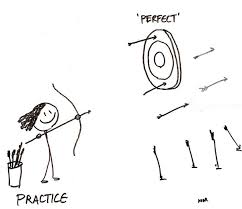
If you never try then you can never fail, right? Don’t let the fear of failure stop you from starting to write. When you first start writing it might not be good, in fact it probably won’t be, and that is fine. Keep going because whatever you practice you get better at. Nobody starts off being a genius at the piano, you have to master scales first. The same goes for writing. Don’t be afraid to be bad. You have to go through that bit to become better and if you never start, you will never get better.

2. Ignore your mistakes (to start with) 

Don’t let yourself get distracted with the details. If you keep stopping to check your spelling and grammar, to reread and edit as you go you will very quickly lose your momentum and become discouraged. Correcting mistakes, fact checking and editing are all really important but they are jobs for later. Ignore the mistakes for now and just get your story written. “You can’t edit a blank page”  and if you keep focusing on getting it right then you’ll never actually write. 

3. Live with your idea 

Thinking about your story is just as important as writing your story. Let this new idea take up space in your head, tell yourself the story, think about the characters, feel the things that you want to bring forth in your writing. If you can’t stop thinking about your idea then you know that it’s something you’re going to want to write about. All writing starts with your imagination so get used to playing inside your own head and telling yourself stories. 

4. Read

Perhaps the most important thing any writer can do is read. Good writers are good readers, if you don’t know what you like to read, how do you know what you like to write? Read widely too, read different genres, different styles, workout what you enjoy reading and also, what you do not enjoy reading. We learn just as much from “bad writing” as from genius writing. If you can identify what you think is bad, you will have a better chance of spotting it in your own work. Read, read, read. 

Take breaks 

It’s important to rest your brain and, metaphorically, refill your cup so take constructive breaks to clear your brain. Going for a walk, staring out of the window, listening to music, talking to a friend. These are all great ways of clearing the creative cobwebs. 

By refiring your imagination it allows you to return to your writing fresh and ready for more creativity. You cannot pour from an empty cup. 

Find a rhythm or choose a target 

Your brain is a muscle, the more you use it the stronger it gets and just like committing to an exercise regime, it’s important to work out how and when you are going to write so it becomes a daily habit.

Write for a half an hour every morning before work. 

Write 500 words every day. 

Before bed, open your notebook and write one page before going to sleep. 

Think about what fits your lifestyle, try a few different routines until you find one that works for you and stick to it. 

Be interested in the world around you

The world is wide and full of stories. Engage with it, read about it and listen to people around you. Listen to their stories and find out what interests you. Maybe you love true crime? Maybe world history is your jam? Perhaps you love a really spooky poltergeist legend?  Be interested, ask questions and explore the playground that is our planet. Once you start opening yourself up you will find ideas flooding you wherever you go. 

WRITE 

Now that you have your routine  and you’ve been thinking about your idea and you’ve read loads of books, the most important thing is to actually write. That can feel a bit daunting, can’t it? Don’t overthink it, don’t worry too much about what you’re writing or even how you’re writing (remember it doesn’t have to be good yet) just write. One word at a time, that’s how any great piece of fiction is written, one word at a time. 

5 Dartmoor Legends to Inspire You

Dartmoor is rich in myth and legend, making it fertile ground for creative inspiration. Plenty of artists use the Moors’ mysterious and magical background as a starting point for new stories, and you can too. From ancient tales of witches to modern ghost stories, there’s plenty to pick from. Here are five Dartmoor legends to get you going. Pick one and try retelling it from a different character’s point of view, or from a different time frame. The only limit is your imagination. Happy writing! 
  1. The ghost of Okehampton Castle 

Nestled in the middle of the woods are the ruins of a medieval castle. It guards the crossing point of the West Ockment River and was once a sumptuous residence. These days, though, the bare stones of the castle are home to one of the oldest ghost stories in Devon. Lady Mary Howard was the daughter of a rich and cruel nobleman. She was married four times, and, if a local legend is to be believed, she murdered all four of her husbands. It is said that she finally died of a broken heart, just one month after the death of her only son. 

Since then, the tale goes that at midnight, a ghostly carriage, made of the bones of her murdered husbands, travels across Dartmoor. Guarded by two fearsome black dogs, it stops at Okehampton Castle where Lady Howard must pluck a single blade of grass from the mound before dawn.This is the nightly torment of Devon’s Dark Lady and only once the Castle grounds are completely free of grass will her spirit finally find peace. 

  1. The Crazywell Pool Myth

The black waters of Crazywell Pool are said to be bottomless. Some even claim that it ebbs and flows with the cycles of the moon, but while this mysterious natural pool is a beautiful place to swim, parishioners are warned never to go there on Midsummer’s Eve. It is said that its dark waters can foretell death. At dusk, the waters will call out the name of the next parishioner to die and if you stare into it by the light of a Midsummer Eve’s moon, it will reveal their face to you. 

Not long ago, the legend was being told in a local inn. They made a challenge that no one would be brave enough to go to the pool next Midsummer’s Eve. Two young boys accepted the bet, and the following Midsummer’s Eve, they went to the Moor, but no one ever found out what they saw or heard there that night. On their way home, their motorbike sped off the road and they were both killed. No one has dared to challenge the myth since. 

  1. The Mystery of Kitty Jay’s Grave

Kitty Jay was a young girl apprenticed to a farm in the 18th century. While working there, she fell in love and became pregnant by an unknown man. Some say he was the son of a local nobleman, some say he was a fellow farm worker, but when he found out about the child, he abandoned Kitty. Deserted by her lover and doomed to a life of impoverishment and shame, Kitty hanged herself. As a suicide, they buried her in unhallowed ground. They believed that the ghosts of restless‌ spirits would find their way back to haunt the living and so they buried her at a crossroads. 

And there the sad tale of Kitty Jay might have ended were it not for the mystery of her grave. Despite being disowned by her lover, fresh flowers are found on Kitty’s grave every morning. Some say they are left by the sympathetic pixies of the woods, others say it is the spirit of her guilty lover. No one knows, but even to this day, Kitty and her child still receive flowers. 

This legend inspired the novel “The Apple Tree” by John Galsworthy. 

  1. The Witches of Hound Tor

It has long been rumoured that witches use the Moors as a meeting place and gather here to cast their spells. 1,000 years ago, a local lord, Bowerman, was pursuing a hare across Dartmoor with his pack of hounds. Little did he know the valley he and his hounds were hunting through was full of witches performing a ceremony. Bowerman and his hounds burst into the clearing, disrupting their spell and knocking over their cauldron. Bowerman wasn’t frightened of witches. He laughed at their outrage and he and his hounds continued their chase, leaving the angry witches to plot their revenge. 

The youngest witch, Levera, was unusually powerful and had the ability to shapeshift. She turned herself into a beautiful sleek hare and lured Bowerman and the hounds into a new chase. Bowerman pursued her for hours across valleys and tors all over Dartmoor. Each time he thought he would catch her, she seemed to fly ahead of him like smoke. At last, when Bowerman and his pack were almost mad with exhaustion, Levera lured him back to the clearing where he had ruined their ritual. Just when he thought he had caught her, she turned back into her human form and, using the combined power of the coven, they turned Bowerman and his hounds to stone. 

Hound Tor and Bowerman’s Nose are two of the most recognisable landmarks on Dartmoor and can be found on the Northern slopes of Hayne Down. 

  1. The Legend of the Hairy Hands

There are many tales of strange creatures that live on Dartmoor but none so malevolent towards travellers as the Hairy Hands. When driving the road near Dartmoor prison it is said that a large pair of demonic hands will grab your steering wheel and try to force you off the road. Inhumanly strong and covered in hair, the hands have been sending drivers to their deaths for decades. In 1921 a young prison worker was killed when he lost control of his motorcycle. His two children,who were riding in the sidecar at the time, told the story of their father shouting and wrestling with some unseen entity moments before he was killed. 

Another motorist who survived his ordeal claims he saw a large pair of hairy hands take hold of his handlebars and forcibly try to steer his bike off the road. 

A young couple who were camping in their caravan awoke to find a large hand crawling towards them across their window. The woman said the hand exuded a demonic intent to do her and her husband harm. She made the sign of the cross and the hands, seeing this, reared back in fear and vanished.

This is a tale that has arisen again and again with many people insisting that they have seen the hands with their own eyes. Some say it is the demonic spirit of an ex prison inmate, others claim they are the hands of the devil himself.